
Problems we solve

You didn't build a company to spend your days refereeing grown adults.

The best hire you ever made just gave notice, the one you should have let go two seasons back is still here, and every conflict in the building ends up in your office. We've seen this roster in hundreds of companies — and it isn't a hiring problem. It's a structure problem, and structure is buildable.

We coach your managers in their own meetings — not in a seminar room

300+businesses served nationwide
Top 1%consultant recognition
2×1written net-profit guarantee
The short answer: Good employees rarely quit over pay alone — they quit undefined futures, unenforced standards, and "managers" who were never taught to manage. Turnover drops when structure arrives: every result gets exactly one accountable name, managers are developed inside a weekly meeting rhythm with real numbers, and compensation is redesigned to reward the behavior you actually want. Do it in that order, because incentives bolted onto a broken structure only make the dysfunction more expensive.
Sound familiar?

The roster problems nobody warns you about

Turnover is the loud symptom. The quiet ones do more damage — because they explain why the good people keep walking.

  • Your best people leave for "opportunity." What they actually left was a place where nobody's future was defined.
  • Mediocrity has tenure. Underperformers stay because no standard exists to hold them against — and everyone watches you tolerate it.
  • Promotions go to whoever's been here longest. Your "managers" are senior doers with new titles and no management tools.
  • Every conflict escalates to you. Two employees disagree, and somehow it's your afternoon.
  • Raises are negotiated, not earned. Pay moves when someone threatens to quit, which teaches everyone to threaten.
  • Training is "go shadow Danny." New hires inherit habits, not standards.

If the deeper issue is that everything routes through you personally, start with the owner-dependence problem — the two usually arrive together.
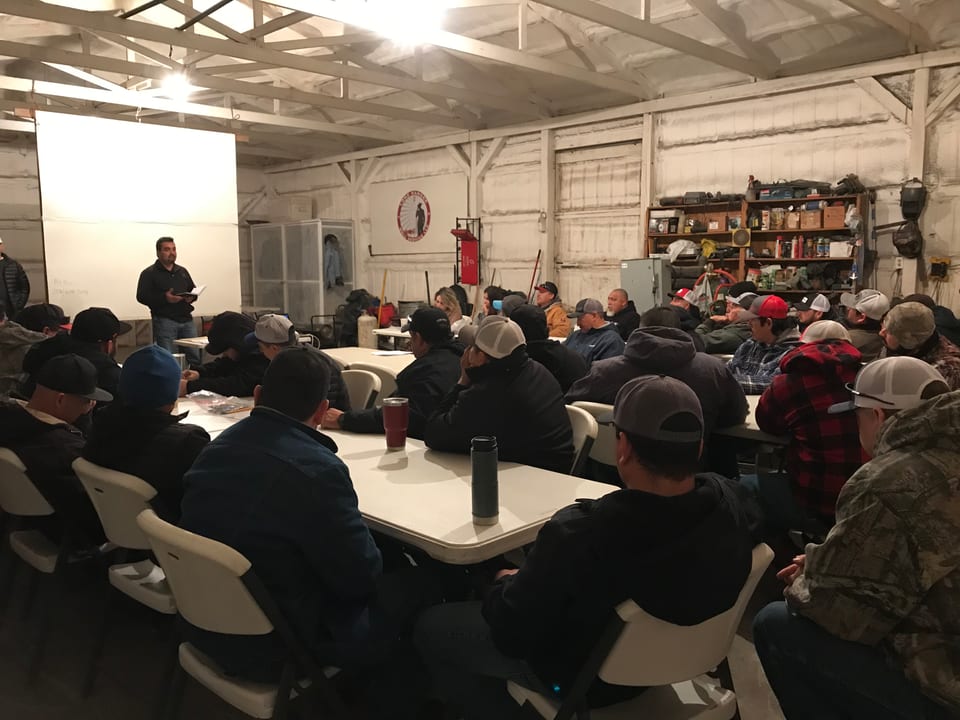
A client CEO briefing his crew at an all-hands meeting on the shop floorClient's business

A client's CEO briefing his crew — the all-hands that follows a discovery.

Why it happens — and the way out

How a revolving door becomes a team

1. Give every result exactly one name

People don't quit hard work — they quit confusion and unfairness. We build an accountability structure through our leadership and team development work: clear seats, clear standards, and a scorecard, so performance stops being a matter of opinion and conflict stops needing a referee.

2. Turn senior doers into actual managers

Your foreman didn't fail as a manager — he was never taught the job. We develop your managers inside a weekly meeting rhythm: running their numbers, coaching their people, and solving problems in front of witnesses instead of forwarding them to you. Where the friction comes from missing processes rather than people, we pair this with systems and SOPs so managers enforce a standard instead of a mood.

3. Pay for the behavior you actually want

Most bonus plans reward showing up in a good year. A designed incentive program pays out when the numbers that matter move — like the bonus and incentive program we created and stood up at Northern Tier Transportation alongside their weekly management meetings. The right people start winning; the wrong ones self-select out.

Bonus and incentive program created and running. Weekly remote management meetings established.
Northern Tier TransportationEngagement outcomes · Transportation
The cost of waiting

What the revolving door costs while you tolerate it

Every exit takes its training with it

Each departure restarts the meter: recruiting, onboarding, the slow months before a new hire earns their keep — and the customer relationships that walked out mid-stream. None of it shows up as a line item, which is exactly why it keeps getting paid. The longer the door revolves, the more of your payroll goes to people still learning the job.

Your best people are watching

Nothing teaches an A-player to leave faster than watching underperformance get tolerated. Every week the standard stays unenforced, your strongest people quietly conclude that effort here is optional and recognition is random — and strong people always have somewhere else to go. The ones you can least afford to lose are always the first out.

You stay the full-time referee

Every conflict that escalates to your office is an hour taken from pricing, selling, and steering the company. Refereeing feels like leadership, but it's actually the structure's job — clear seats, clear standards, a weekly meeting where issues get solved in the open. Until that exists, you're paying an owner's salary for a referee's work.

Team & turnover FAQ

What owners ask us first

Is this a pay problem? Everyone says the market rate went crazy.
Pay gets people in the door; it rarely explains who walks out. People leave managers, chaos, and dead ends far more often than they leave paychecks. Fix the structure and the management, then point compensation at the right behaviors — an incentive plan bolted onto a dysfunctional shop just makes dysfunction more expensive.
What do I do about the long-tenured guy everyone works around?
First, install the standard — a defined seat, a scorecard, a weekly review. A surprising share of "problem employees" perform once expectations are explicit and applied to everyone. The ones who don't have then made a clear choice, and the exit conversation becomes about numbers, not personalities. Either way, you stop paying the hidden tax of the whole team watching you avoid it.
My managers are my best technicians. Can they really learn to manage?
Usually, yes — with tools, a rhythm, and coaching in their real meetings with their real numbers. Some discover they'd rather stay technical, and that's a useful discovery too: better a great technician than a miserable manager. The free assessment is a fast way to find out what you're actually working with. If daily operations are also chaotic, see how we replace firefighting with systems — managers can't manage a process that doesn't exist.
Why do my best employees keep leaving?
Because the best employees are the first to notice what the workplace really rewards. When there's no defined seat, no clear standard, and no visible path forward, top performers read the message accurately: staying means more work for the same recognition as the person coasting next to them. They don't leave for the raise — the raise is just the excuse that makes the exit polite. Building seats, standards, and a real path is covered in our guide to building a leadership team.
How do I hold employees accountable without micromanaging them?
Replace surveillance with a scorecard. Micromanagement is what happens when expectations live in your head, so the only way to enforce them is to hover; accountability is what happens when each seat has a few visible numbers reviewed in the same meeting every week. The employee always knows where they stand, and you never have to ambush anyone — the number does the talking. The format is laid out in our weekly management meeting guide.
Do bonus programs actually reduce turnover?
Designed ones do; default ones don't. A bonus that everyone gets in a good year is just deferred salary — it retains nobody and motivates nothing. A program tied to the specific numbers each seat controls changes who wins: your best people start out-earning their market alternatives, and chronic underperformers stop being subsidized. That's the kind of program we created and stood up at Northern Tier Transportation alongside their weekly management meetings, as part of our leadership & team development work.
How do I get employees to solve problems without bringing everything to me?
Give problems a scheduled home that isn't your doorway. When there's a weekly meeting where issues get raised, owned, and solved in front of the whole management team, the daily drive-by escalations dry up — partly because there's now a proper channel, and partly because people solve more themselves when they know the alternative is presenting it publicly. Pair that with documented escalation rules so everyone knows what genuinely needs you. Installing that rhythm inside your real meetings is exactly how our engagements work.
Related insights

Go deeper on building the team

Every dollar you invest returns at least two in net profit. Guaranteed.

That is our 2×1 guarantee. Complete the short qualifying application and get a free, no-obligation business assessment with an accredited consultant.

Start your free assessment