
Systems & process design

If it lives in your head, you don't own a business. You are the business.

We turn tribal knowledge into documented systems, SOPs, and an operating rhythm your team actually follows — so quality stops depending on who showed up, and growth stops depending on you being everywhere at once.

Systems built with your team, on your floor — not templates dropped in your inbox

300+businesses served nationwide
Top 1%consultant recognition
2×1written net-profit guarantee
Why systems fail

You've probably tried writing procedures before. Here's why the binder died.

Most SOP projects fail for the same three reasons: they're written by the wrong person, they're too long to use, and nothing in daily operations refers back to them. The document was never the point — the habit is.
  • Written with the doers. The people who do the work help write the standard — so it matches reality and they own it.
  • Short enough to follow. Checklists and one-pagers at the point of work, not chapters in a shelf binder.
  • Wired into the rhythm. Every SOP connects to training, to a scorecard number, and to a standing meeting where it gets inspected.
  • Maintained by owners, not the owner. Each process has a named person accountable for keeping it current — and it isn't you.
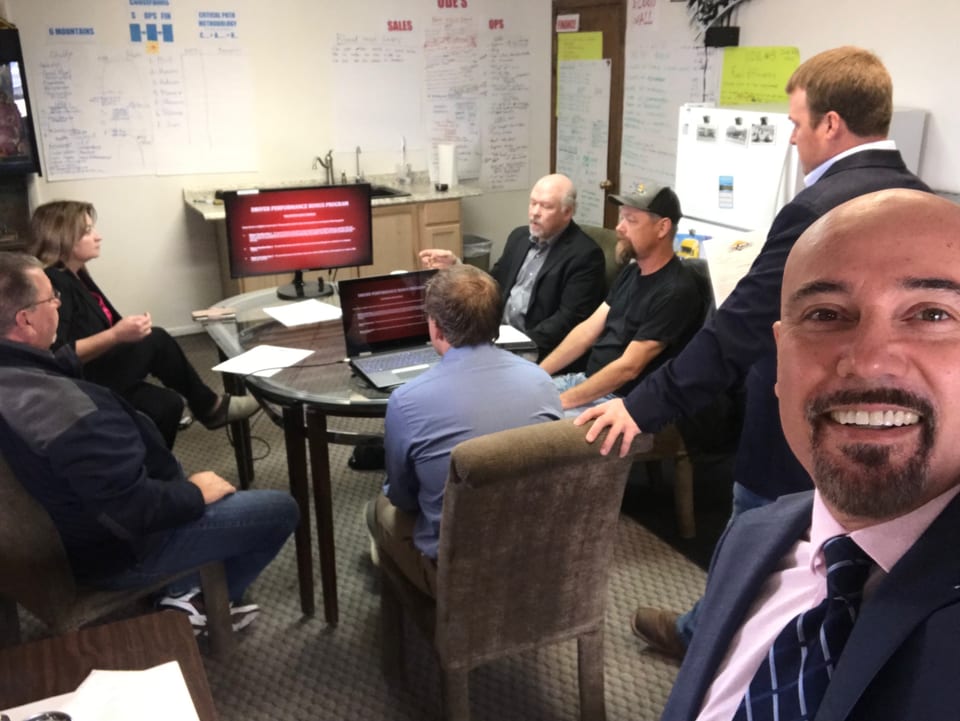
Armando Juarez presenting an incentive program in a client working sessionArmando on site

Armando presenting a driver bonus program to a client's team.

What gets built

The operating system your company graduates into

Core process map

How work actually flows from first call to final invoice — mapped with your team, bottlenecks and hand-off failures made visible, then redesigned.

SOPs & checklists

Documented standards for the processes that drive quality, safety, and margin — written at the altitude your crew will actually use.

Roles & accountability

A clean accountability chart: every result in the company has exactly one name next to it. No more "I thought he had it."

Scorecards

A handful of weekly numbers per seat that tell you the process is working — before the month-end statements do.

Meeting rhythm

A tight weekly management meeting and daily huddles that replace hallway chaos with a predictable cadence. See the format.

Training loop

New hires learn from the system, not from shadowing whoever's least busy — cutting ramp-up time and protecting the standard as you grow.

“He has implemented Podio, a program that centralizes our training programs, forms, customer inquiries.”
Cortney FeinauerSpartan Pools
“He has changed and continues to change the way we operate for the better.”
Jamie AutinMarsh Buggies, Inc.
Is this you?

Built for owners who are tired of being the manual

This engagement fits if…

  • You run a $1M–$10M company and every "how do we handle this?" question still routes through your phone
  • Quality and rework depend on which crew or tech showed up that morning
  • New hires learn by shadowing whoever is least busy — and take far longer to become productive than they should
  • You've already tried an SOP binder or a wiki, and it died on the shelf within a month of the kickoff meeting
  • You're turning down work — or afraid to take a real vacation — because operations can't run a week without you

It's probably not the right fit if…

  • You're pre-revenue or idea-stage — free SCORE mentoring is the better first stop, and Armando serves there as a Certified Mentor
  • Revenue is well below $1M — start with our free systemization guides and grow into an engagement later
  • You want a downloadable template pack, not systems built and installed with your actual team
  • You're not willing to let the people who do the work help write the standards — imposed SOPs are the binder problem all over again
Systems FAQ

Common questions

My team hates paperwork. Will they actually follow SOPs?
They hate paperwork that slows them down and gets ignored. They follow standards that make their day easier — clear expectations, fewer redos, less blame. That's why we build SOPs with your doers, keep them short, and tie them to the numbers your team is already judged on.
Do you use a specific software platform?
We fit the tool to the company, not the company to a tool. For some clients that's a platform like Podio to centralize training, forms, and customer inquiries; for others it's a disciplined set of checklists inside tools you already own. The system matters more than the software.
How long does it take to systemize a business?
The first working systems — core process map, top SOPs, weekly scorecard, and meeting rhythm — typically stand up within the first few months. Full owner-independence is a longer arc; see our exit and succession work for where that road leads.
We're growing fast. Should we wait until things settle down?
Growth without systems is how companies grow themselves to death — quality slips, heroes burn out, and margins thin exactly when volume peaks. The best time to systemize is before the next jump in volume, not after it breaks something. More on what breaks at scale.
How is a systems engagement priced?
It's scoped after discovery — the free assessment tells us how many processes need work, how deep the documentation gap runs, and how much hands-on implementation your team needs, and the proposal is priced to that scope. Every engagement is covered by our written 2×1 net-profit guarantee: the profit improvement is projected in writing before you commit. Read the guarantee.
What actually happens in the first two weeks?
We're on your floor, not in a conference room: watching how work really moves from first call to final invoice, interviewing the people who do it, and mapping where jobs stall, get redone, or fall between hand-offs. If your days feel like the pattern we describe in chaotic operations with no systems, this is where that fog lifts. You end the second week with a real process map and a prioritized fix list — no binder-writing yet.
How do we know the systems work is paying off?
In your own financial statements — not in our slide deck. Documented processes show up as less rework, less overtime, faster ramp-up, and steadier job margins, and we track those lines with you month by month. Waste hides in plain sight until you map it: one client assessment documented $175,500 in wasted labor. Your P&L is the scoreboard.
Do you work on-site, or can you systemize a company remotely?
Both. In the Dallas–Fort Worth Metroplex we work on-site — process mapping is best done standing where the work happens. Nationwide clients get immersion visits to walk the operation in person, then weekly remote working sessions to build, install, and inspect the systems with your team.
Related insights

Go deeper on systems

Every dollar you invest returns at least two in net profit. Guaranteed.

That is our 2×1 guarantee. Complete the short qualifying application and get a free, no-obligation business assessment with an accredited consultant.

Start your free assessment